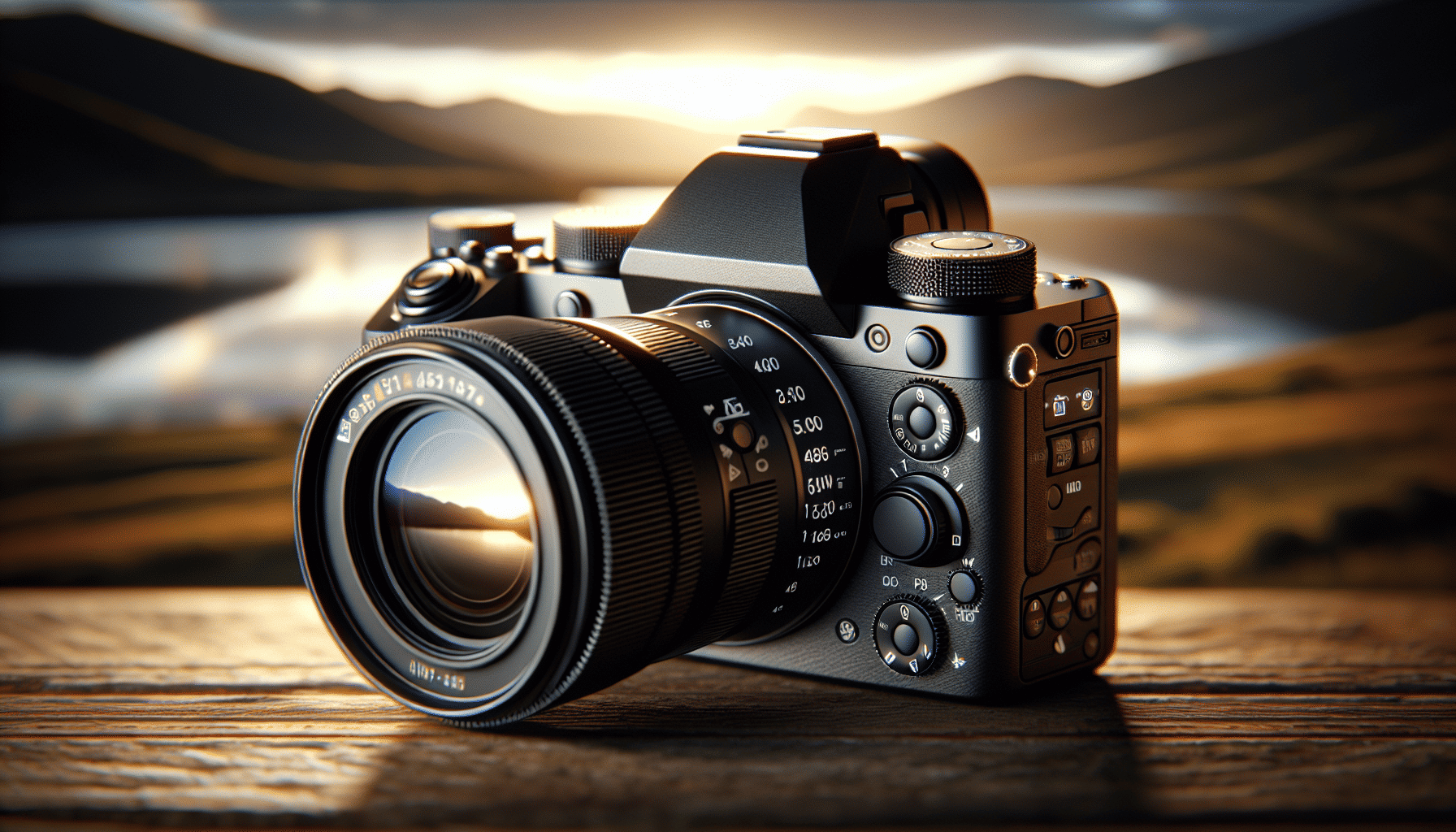
Unlocking the potential of your camera involves more than just pointing and shooting. To truly capture the perfect shot every time, it's essential to understand and master the various settings your camera offers. Here’s a comprehensive guide to help you take control of your photography.
Understanding Exposure
One of the foundational aspects of photography is exposure, which is determined by three key elements: aperture, shutter speed, and ISO. Mastering these will allow you to manipulate light effectively and ensure your images are neither overexposed nor underexposed.
-
Aperture: This refers to the size of the lens opening that allows light to reach the camera sensor. A wider aperture (represented by a lower f-number, like f/2.8) lets in more light, which is ideal for low-light conditions and achieving a shallow depth of field for portraits. A smaller aperture (such as f/16) is useful for landscapes where you want more of the scene in focus.
-
Shutter Speed: This is the duration the camera's shutter remains open to let in light. Faster shutter speeds (like 1/1000 of a second) are perfect for freezing fast-moving subjects, whereas slower speeds (like 1/30) are great for capturing motion blur in creative ways.
-
ISO: This setting adjusts the camera sensor’s sensitivity to light. Lower ISO settings (such as ISO 100) are used in bright conditions for a cleaner image, while higher settings (like ISO 6400) can brighten a dim scene at the cost of introducing noise.
Focus Modes and Techniques
Different situations call for different focus techniques:
-
Single Autofocus (AF-S) is suitable for stationary subjects. Once you press the shutter halfway, the focus locks until the picture is taken.
-
Continuous Autofocus (AF-C) is useful for moving subjects, like wildlife or sports, as it continuously adjusts focus while the shutter button is halfway pressed.
-
Manual Focus can be vital in low-light scenarios or when precise focus is critical, such as in macro photography.
White Balance and Color Profiles
White balance ensures your photos have accurate colors under varying lighting conditions. Most cameras offer pre-set modes (like daylight, cloudy, tungsten), and learning to use these ensures your images don't have unwanted color tints. Additionally, experimenting with different color profiles can give your images distinct looks, whether it be vivid, neutral, or monochrome.
Metering Modes
Metering helps your camera determine the exposure levels based on the lighting in a scene. Common metering modes include:
-
Matrix/Evaluative: This mode takes multiple readings across the frame, offering balanced exposure for most scenes.
-
Center-Weighted: Prioritizes the area around the center of the frame, useful for portraits.
-
Spot Metering: Measures exposure at a single point, perfect for backlit subjects.
Advanced Settings
For those ready to delve deeper, exploring settings like exposure compensation, bracketing, and using histogram views can further enhance your ability to capture the perfect shot.
-
Exposure Compensation adjusts the camera’s suggested exposure settings to increase or decrease the brightness.
-
Bracketing captures several photos at different settings to ensure the perfect exposure.
-
Histogram Analysis can guide you in real-time to ensure your image is properly exposed across highlights, midtones, and shadows.
Practice and Experimentation
Mastering your camera’s settings requires practice. Experimenting in different situations and lighting conditions will help you learn what techniques work best. Joining local photography groups or online forums can provide additional insight and inspiration. Remember, every expert was once a beginner, and the path to mastery is paved with clicks and curiosity.
With dedication and understanding of your camera's capabilities, you can consistently capture images that not only reflect reality but also convey your unique creative perspective. Happy shooting!